Shooting Is a "Quiet" Sport
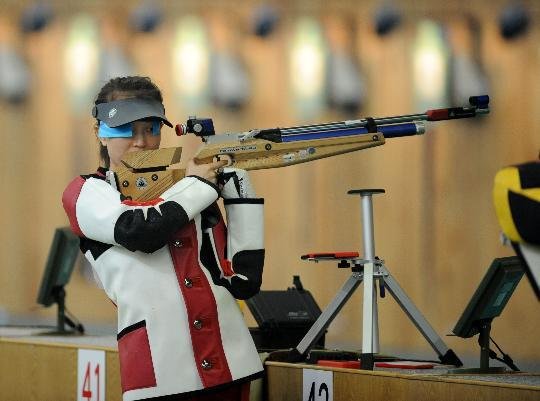
The first time I walked into a 10-meter air rifle range
my biggest surprise was this: stand firm, raise the rifle, aim — the whole sequence looks like you are simply zoning out, yet once a round of shooting is actually finished, my back was soaked in sweat. This sport, called a “quiet” sport at the Olympics, has never been a contest of arm strength — it is a contest of the brain’s control over the body.
Heart Rate: Treated by the ISSF as a Core Metric
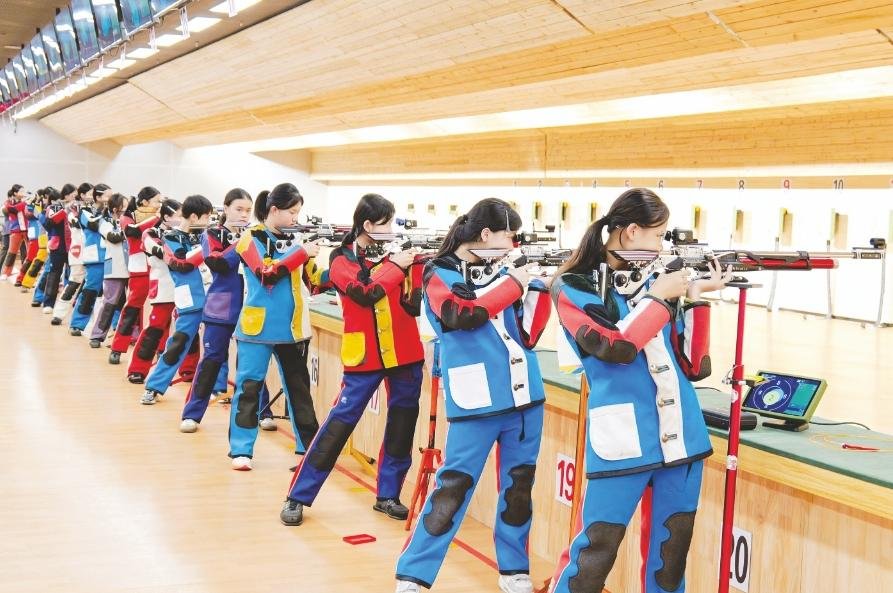
A controlled study published by the HeartMath Institute showed that after shooters underwent “12 weeks of HRV (heart rate variability) biofeedback training,” parasympathetic nervous system activity increased, training and competition stress dropped significantly, and scores and consistency improved in tandem. In other words, top performers are not “unfazed” — they have learned to keep their heartbeat within a controllable range before pulling the trigger.
The International Shooting Sport Federation (ISSF) explicitly lists “physiological monitoring” as an essential capability for top-level athletes in its official training guide, and the most critical metric among them is heart rate — it directly reflects the arousal level of the autonomic nervous system under high pressure and is an objective signal of whether an athlete can enter a stable state.
Breathing: Bringing Meditation onto the Firing Point
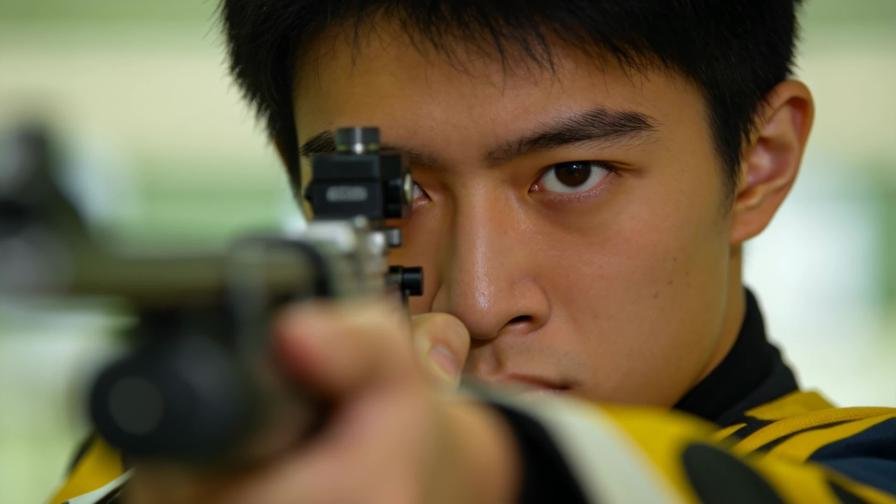
There is a saying in the shooting community: “pull the trigger between two heartbeats.” This is not mysticism — in a study published on PubMed by Chinese scholars, shooters trained for 4 weeks with a “resonant breathing” rhythm of about 6 breaths per minute, and the results showed clear improvements in both HRV metrics and reaction quality. This operates through almost the same mechanism as the breathing training in mindfulness meditation.
A 2026 study in Frontiers in Psychology targeting elite rifle athletes was even more direct: after “7 weeks of mindfulness (MAIC) training,” athletes showed higher alpha waves and lower delta waves in EEG brain activity under competition stress — neural efficiency improved, and performance was still maintained at follow-up.
Movement Consistency: "Downloading" the Brain into the Muscles
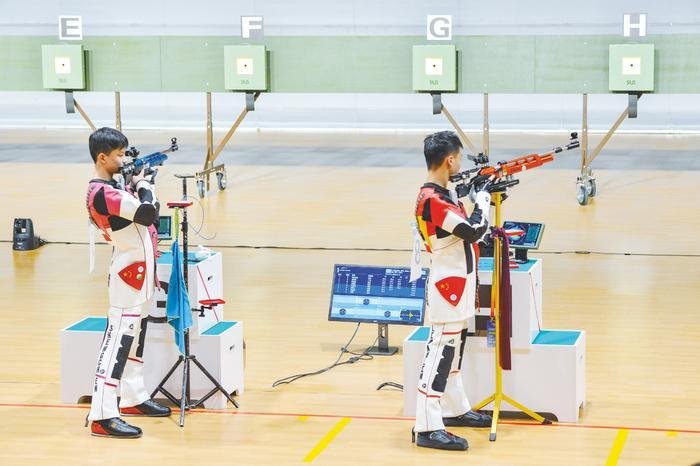
Why does every shot of an Olympic athlete look almost identical? A classic study in the British Journal of Sports Medicine found that shooting performance showed a significant quadratic correlation with “movement tension level” (r = 0.42, P < 0.0001). The more relaxed and consistent the movement, the better the performance. Interview studies of elite shooters also point out that the core psychological factors determining performance are not “on-the-spot bursts” but “mental rehearsal, emotion regulation, and day-after-day movement consistency” — what we commonly call muscle memory.
A Side Benefit for Ordinary People: Stress Relief
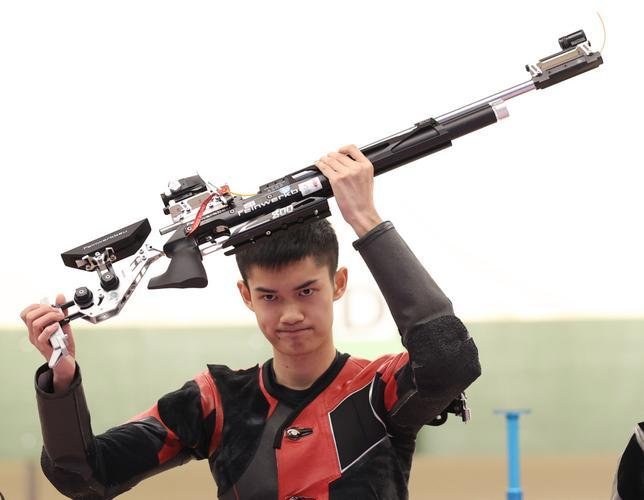
The most “therapeutic” part of shooting for beginners is that you “must” lock your attention onto the front sight, your breathing, and your trigger finger — the work-group messages in your head get forcibly cleared to zero. From the perspective of neural mechanisms, this heavily overlaps with the pathway mindfulness meditation uses to train attention — except that it hands you a target paper with instant feedback.
The next time someone says "shooting is just firing a gun, isn't it?",
you can tell them: this may be the most meditation-like sport at the Olympics.
References
An, Y., Zheng, F. H., & Lu, J. J. (2020). [Effects of resonant breathing biofeedback training on athletes’ heart rate variability and choice reaction time]. *Chinese Journal of Applied Physiology, 36*(5), 477–480. [https://pubmed.ncbi.nlm.nih.gov/33634645/](https://pubmed.ncbi.nlm.nih.gov/33634645/)
Huang, D., Abdul Wahab, M. N., & Zhang, X. (2024). Effect of heart rate variability biofeedback training on score and stress level of shooting athletes. *Environment-Behaviour Proceedings Journal, 9*, 115–122. [https://www.heartmath.org/assets/uploads/2024/08/effect-of-hrv-biofeedback-training-athletes.pdf](https://www.heartmath.org/assets/uploads/2024/08/effect-of-hrv-biofeedback-training-athletes.pdf)
International Shooting Sport Federation. (2019, September 12). *Ten gold strategies to achieve peak performance in important shooting competitions*. [https://www.issf-sports.org/news.ashx?newsid=3378](https://www.issf-sports.org/news.ashx?newsid=3378)
Li, W., Guo, J., Wei, M., & Dong, G. (2026). Mindfulness training modulates EEG oscillations and improves shooting accuracy in competitive stress. *Frontiers in Psychology, 17*, Article 1802645. [https://doi.org/10.3389/fpsyg.2026.1802645](https://doi.org/10.3389/fpsyg.2026.1802645)
Moreira da Silva, F., Malico Sousa, P., Pinheiro, V. B., López-Torres, O., Refoyo Román, I., & Mon-López, D. (2021). Which are the most determinant psychological factors in Olympic shooting performance? A self-perspective from elite shooters. *International Journal of Environmental Research and Public Health, 18*(9), Article 4637. [https://doi.org/10.3390/ijerph18094637](https://doi.org/10.3390/ijerph18094637)
Solberg, E. E., Berglund, K.-A., Engen, Ø., Ekeberg, Ø., & Loeb, M. (1996). The effect of meditation on shooting performance. *British Journal of Sports Medicine, 30*(4), 342–346. [https://doi.org/10.1136/bjsm.30.4.342](https://doi.org/10.1136/bjsm.30.4.342)