Pickleball 101:
Everything You Need to Know
Before Your First Game
BY BOWEN LIU(Kristen)
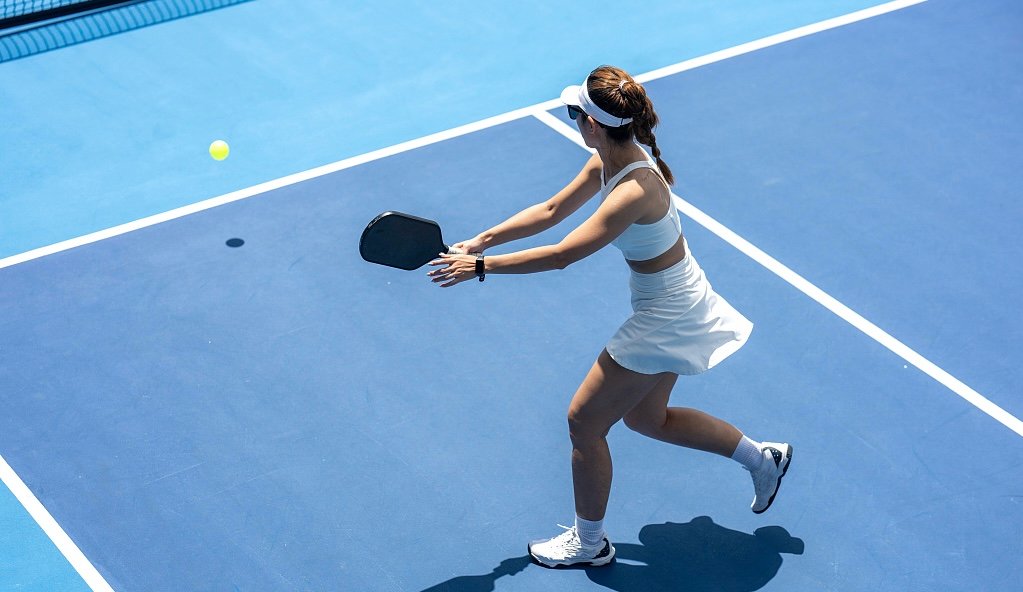
A paddle, a perforated ball, and a rally across the net—that is pickleball at first glance. It combines elements of tennis, badminton, and table tennis, but has distinctive rules of its own. Why can players not volley immediately after the serve? What is the “kitchen”? And why are three numbers called out in doubles?
From the first serve to following the score, explore the equipment, essential rules, and play that define the game. New to pickleball? Start here.
01| What Is Pickleball?
Pickleball is a paddle sport played across a net with a solid paddle and a perforated plastic ball. It can be played indoors or outdoors, either as singles with one player on each side or doubles with two.
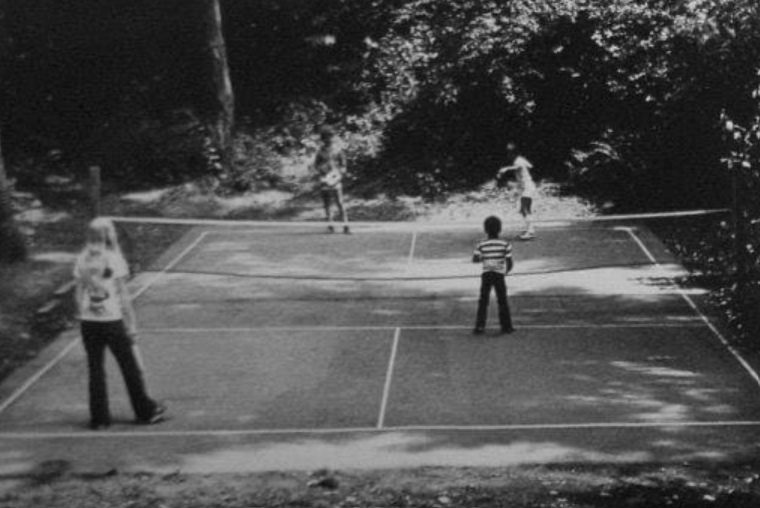
The sport began as a game for children. In 1965, on Bainbridge Island in Washington, United States, Joel Pritchard, Bill Bell, and Barney McCallum developed its early form using table tennis paddles, a perforated plastic ball, and a lowered badminton net.
02| Get to Know the Court
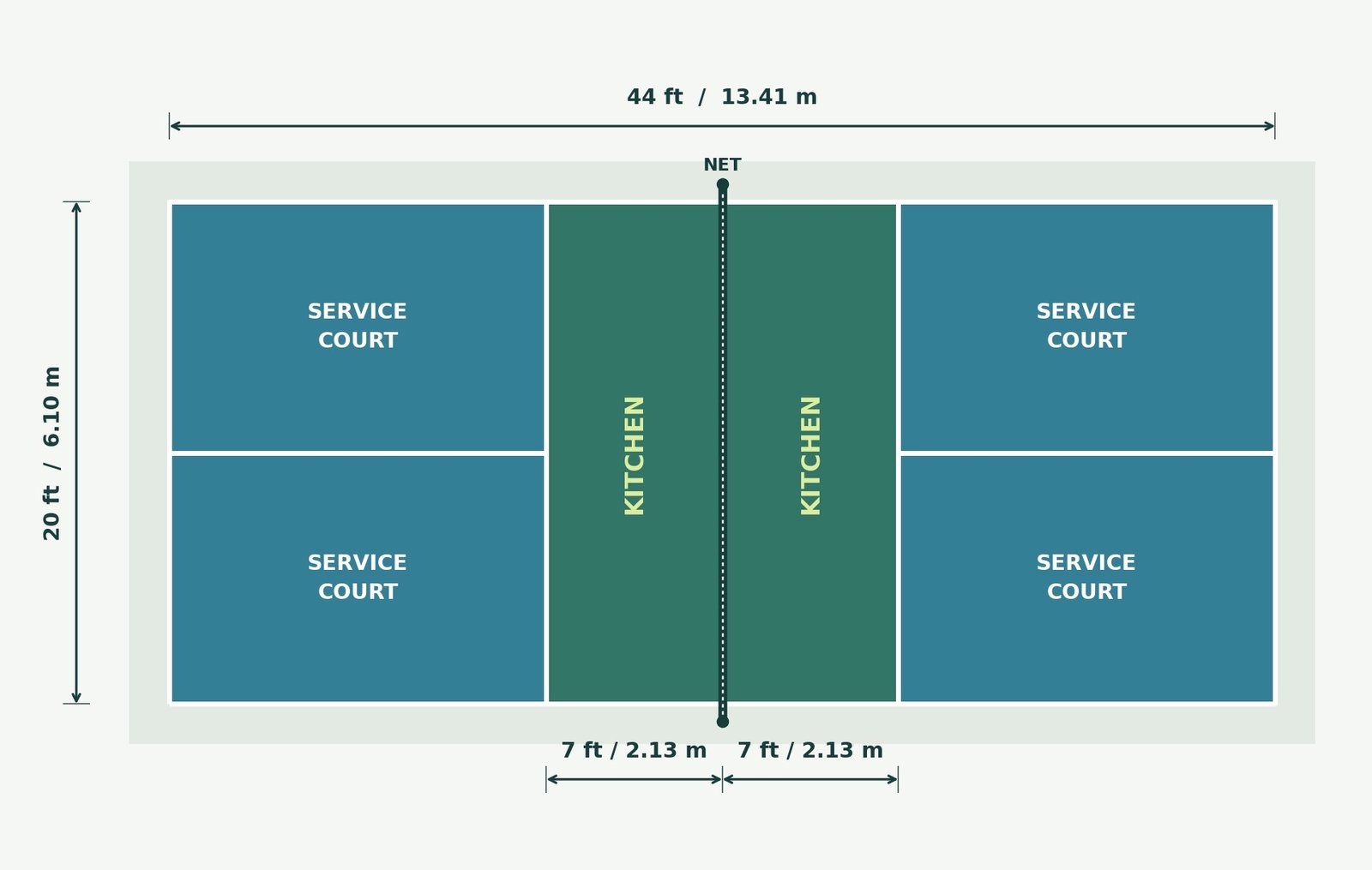
A standard pickleball court is approximately 6.10 metres wide and 13.41 metres long. Singles and doubles use the same court dimensions. The net stands approximately 91.4 centimetres high at the sidelines and 86.4 centimetres at the centre.
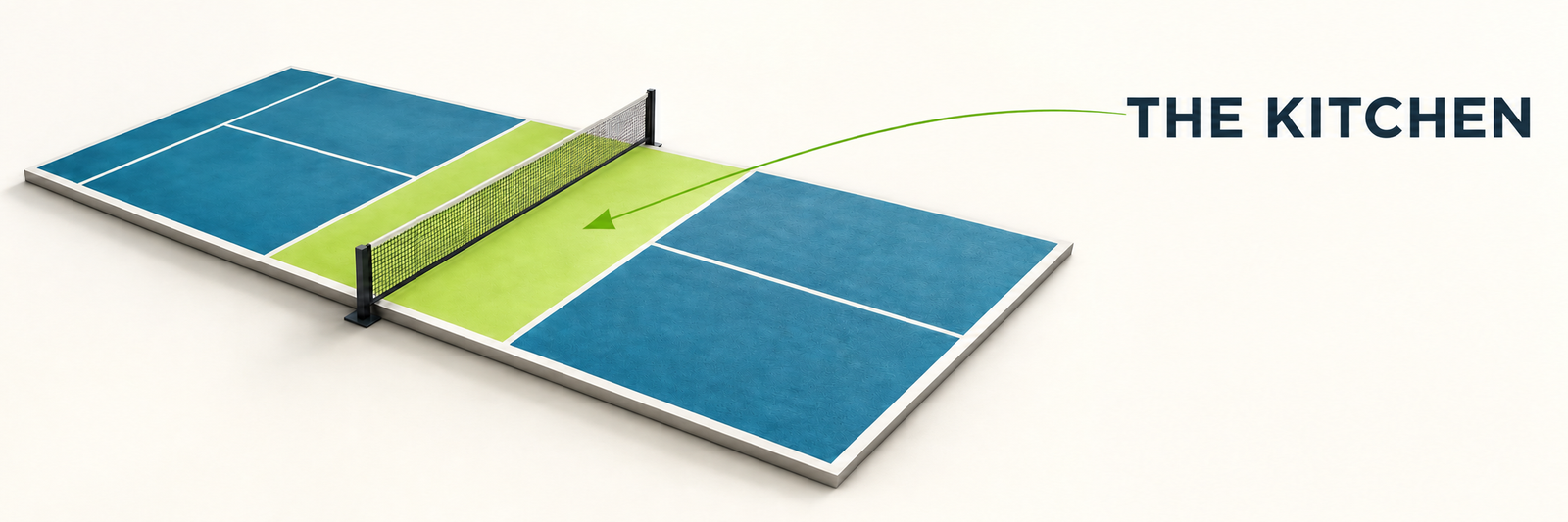
One area to recognise straight away is the “kitchen” on either side of the net. Officially called the non-volley zone, it extends approximately 2.13 metres from the net on each side. Players may enter it, but whether the ball has bounced matters when making a shot from this area.
03| How does the Serve Work?
Every rally begins with a serve. The ball must travel diagonally across the net into the opposite service court and clear the kitchen. A serve that lands in the kitchen or touches the kitchen line is a fault.
There are two serving options. A volley serve is struck before the ball bounces. A drop serve is struck after the ball has been dropped and allowed to bounce.
For a volley serve, the arm must move in an upward arc, contact must not occur above waist level, and the paddle head must not be above the highest part of the wrist at contact. These three restrictions do not apply to a drop serve, although it has its own requirements.
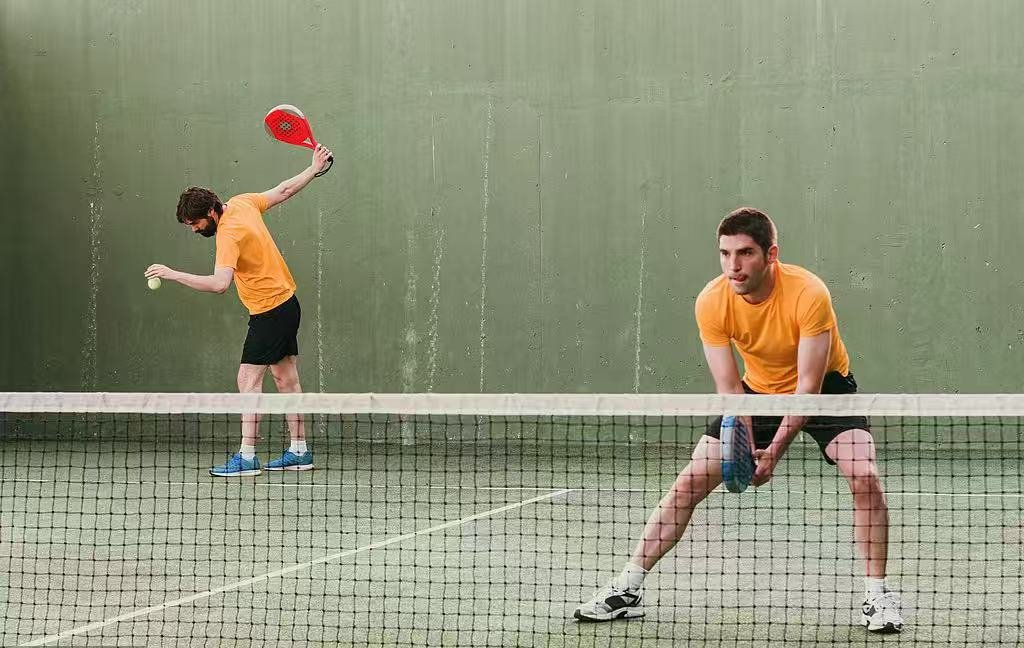
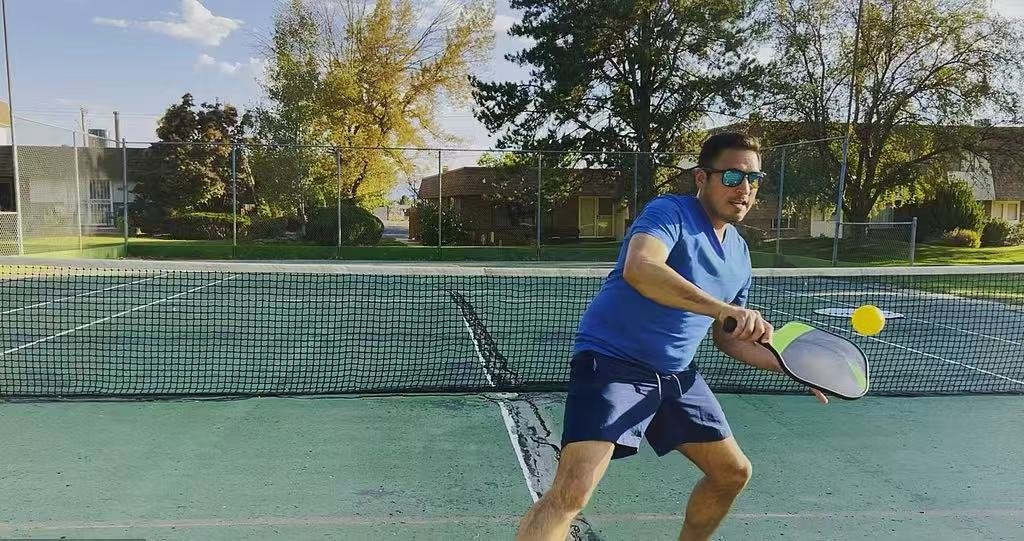
Foot placement matters too. At contact, at least one foot must touch the ground behind the baseline. Neither foot may touch the baseline or the court inside it, or extend beyond the imaginary extensions of the sideline and centreline.
For beginners, a useful first goal is to serve legally and consistently into the service court. USA Pickleball’s serving guidance also places consistency ahead of power and variation.
04|Remember: One Side Bounce on Each Side
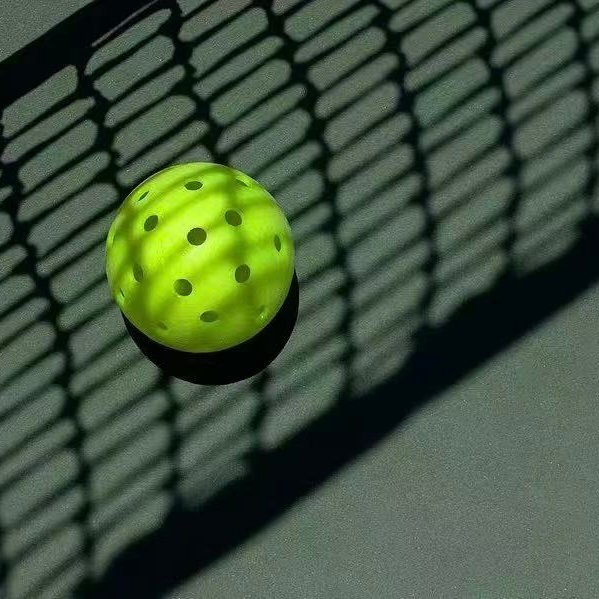
Players cannot begin volleying straight after the serve. The receiving side must let the serve bounce before returning it. The serving side must then let that return bounce before hitting it. This is the two-bounce rule.
Those two bounces occur once on each side of the court. The rule does not allow the ball to bounce twice on the same side. In standard play, failing to return it legally before the second bounce results in a fault.
05| Can Players Enter the Kitchen?
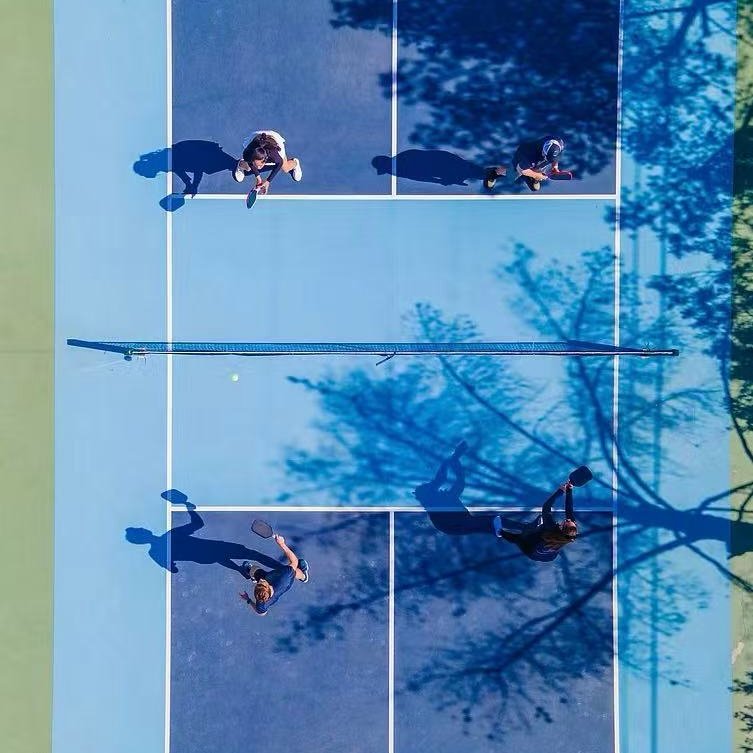
The kitchen restricts volleying; it does not prohibit entry. If the ball bounces inside the kitchen, a player may enter and return it after the bounce.
When volleying, however, a player must not touch the kitchen or its boundary lines. Even if contact with the ball takes place outside the zone, it is a fault if the momentum from the volley subsequently carries the player into the kitchen or onto its lines.
The key question is: has the ball bounced? Players may enter to return a short ball after it bounces, but may not volley while touching the kitchen or its boundary lines.
06| Understand the Score,Follow the Game
Pickleball has different scoring systems. A useful starting point is traditional side-out scoring: only the serving side can score a point. When the receiving side wins a rally, it does not gain a point; instead, the current server loses the serve.
Games are commonly played to 11 points and must be won by at least two points. A score of 11–9 can therefore end a game, while 11–10 cannot.
In traditional doubles, both teammates normally receive a turn to serve. The second server takes over when the first loses the serve. When the second loses it, service passes to the opposing team. The opening service sequence is an exception: the starting team has only one server before service passes to the opposition.
The three numbers called in doubles represent the serving team’s score, the receiving team’s score, and the server number for that service sequence. For example, “4–3–2” means the serving team has four points, the receiving team has three, and the second server is serving. The server number is not a permanent designation for a player.
The opening call of “0–0–2” reflects the starting team’s single-server exception. Pickleball also uses rally scoring, where the winner of a rally scores regardless of which side served. Before playing, check which system will be used.
07| Where Should Beginners Start?
A first session can begin with straightforward tasks: becoming familiar with the bounce, serving into the correct area, and attempting a sequence of returns. The following is a suggested introduction rather than an official training programme.
Begin with gentle exchanges and observe how striking force affects placement. Then practise serving, aiming for a legal, consistent serve into the service court before adding variation.
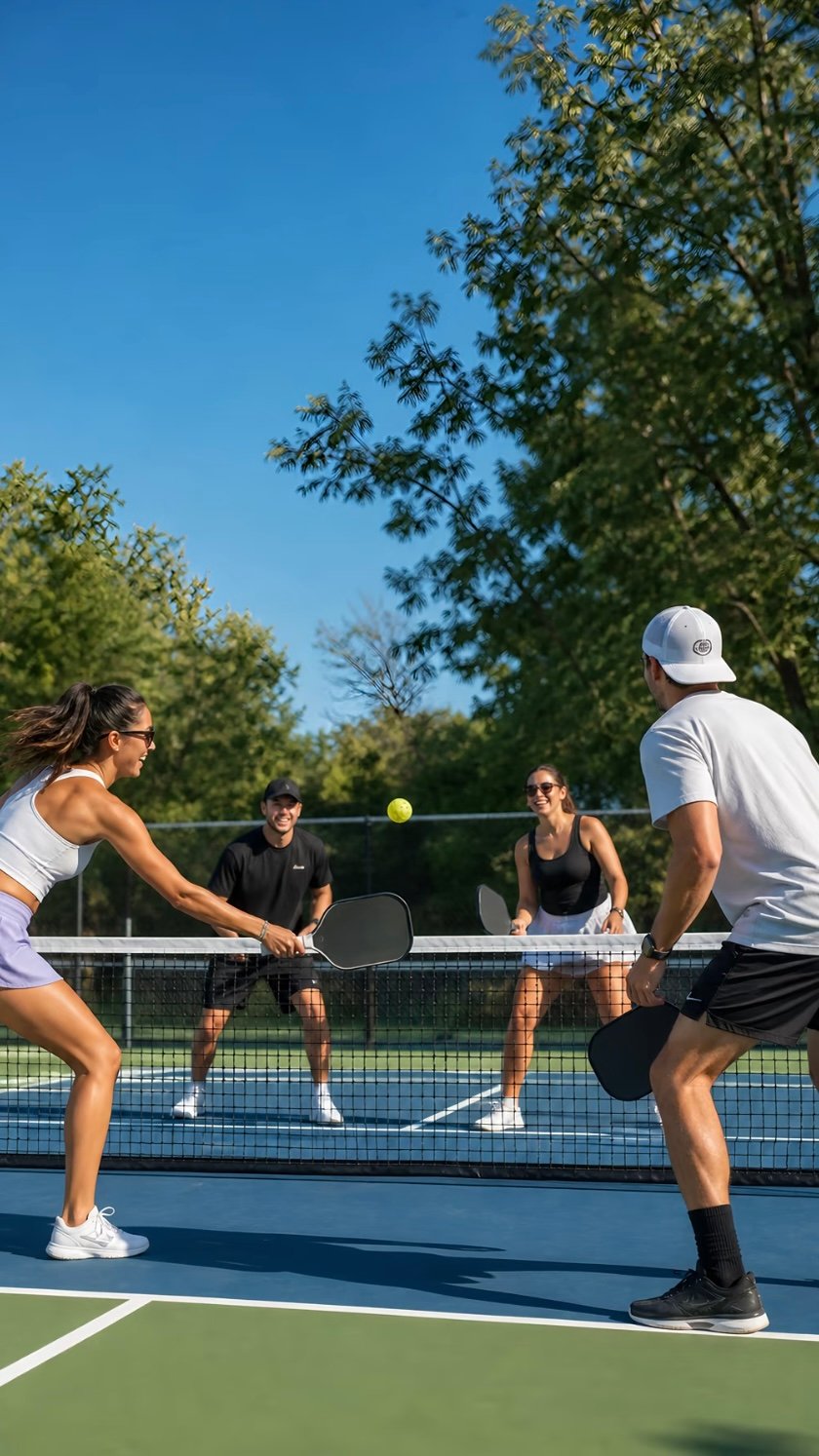
Next, practise the serve, the return of serve, and the serving side’s first return as a sequence, checking that the ball bounces once on each side. Once this becomes familiar, add score calling and service rotation to build towards a fuller game.
08| Before Stepping Onto the Court
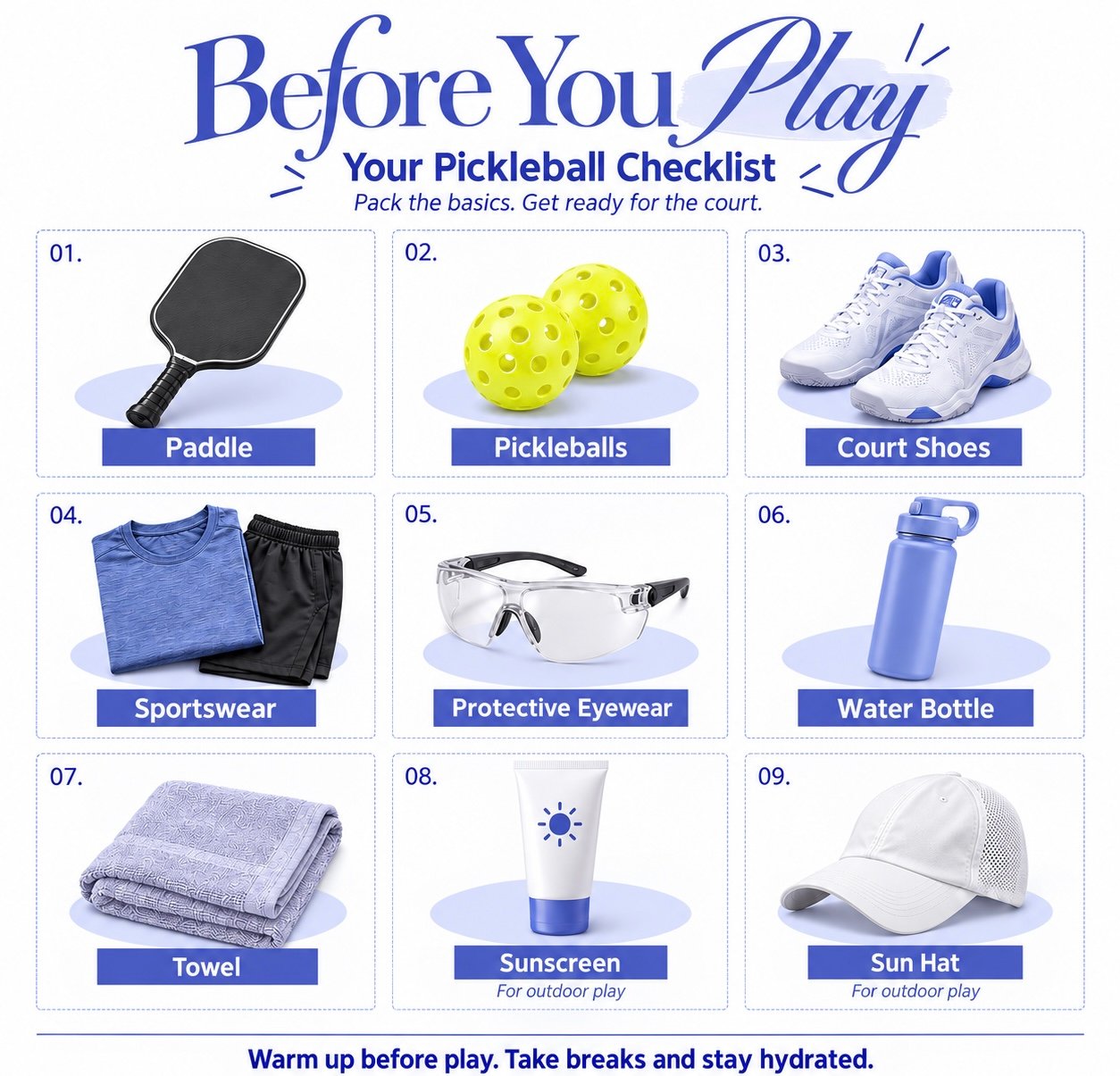
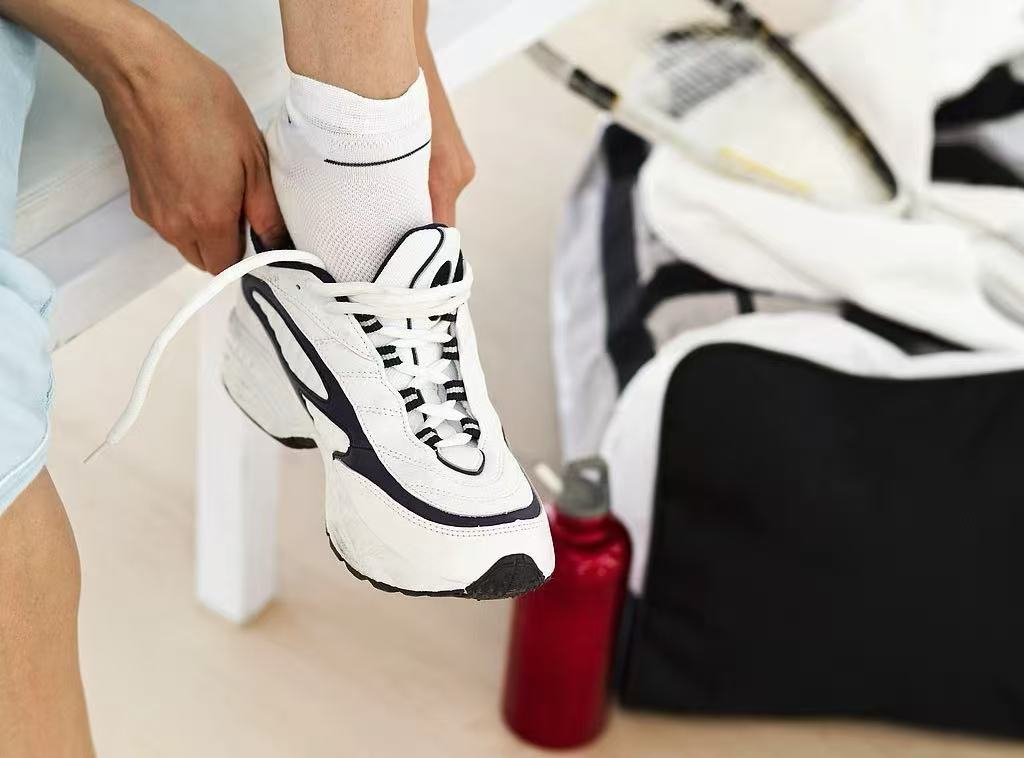
Equipment preparation includes footwear as well as a paddle and ball. USA Pickleball recommends court shoes that support lateral movement; ordinary running shoes may not provide the same support for these actions. Suitable eye protection is also recommended.
Warm up before playing and stay hydrated during the session. Outdoor play also calls for sun protection, including sunscreen and a hat.
Before attending a first session, check whether equipment and introductory instruction are available, and which scoring system will be used. These details make preparation more straightforward.
09| Understanding Injury Risks
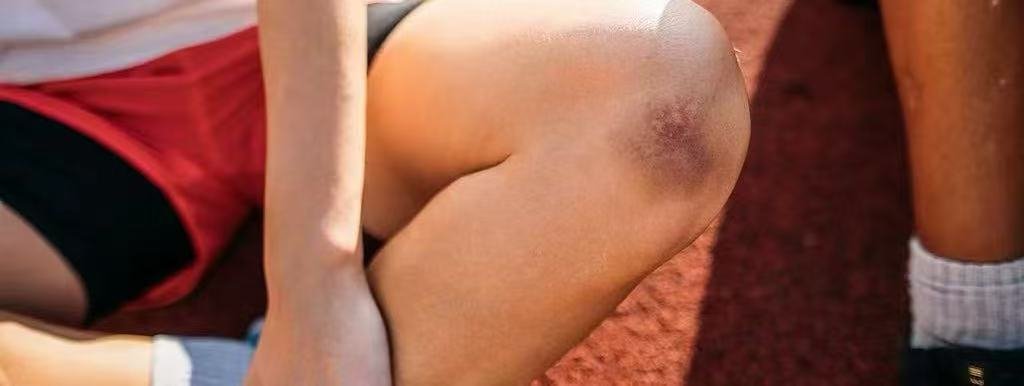
Sprains and strains are two types of sports injury worth recognising: sprains affect ligaments, while strains affect muscles or tendons. Pain, swelling, bruising, or difficulty moving may indicate an injury. Recurring elbow pain during paddle strokes is also a reason to reduce the activity causing pain rather than increase practice.
If sudden pain or a suspected injury occurs, stop the activity and protect the affected area. For minor sprains or strains, NHS guidance on early care includes protection, rest from aggravating activity, ice, appropriate compression, and elevation. Wrap an ice pack in a towel and apply it for no more than 20 minutes at a time. These measures support early care but do not replace an assessment of the injury.
Seek prompt medical assessment if pain is severe or worsening, swelling is substantial, or bearing weight and walking are difficult. An obvious deformity, numbness, or skin that becomes blue, grey, or cold requires emergency medical attention.
Reducing injury risk starts with warming up, wearing suitable court shoes, and learning basic technique. AAOS recommends beginning with easy hitting drills before increasing intensity, staying hydrated, and avoiding sessions that are excessively long or demanding. Learning how to swing and move correctly is part of learning the game.
You know the basics. Your equipment is ready. Now, let that first paddle strike begin! You do not need polished skills to get started, and winning does not have to be the goal of your first session. From your first serve to a successful return and a rally worth celebrating, every step forward counts.
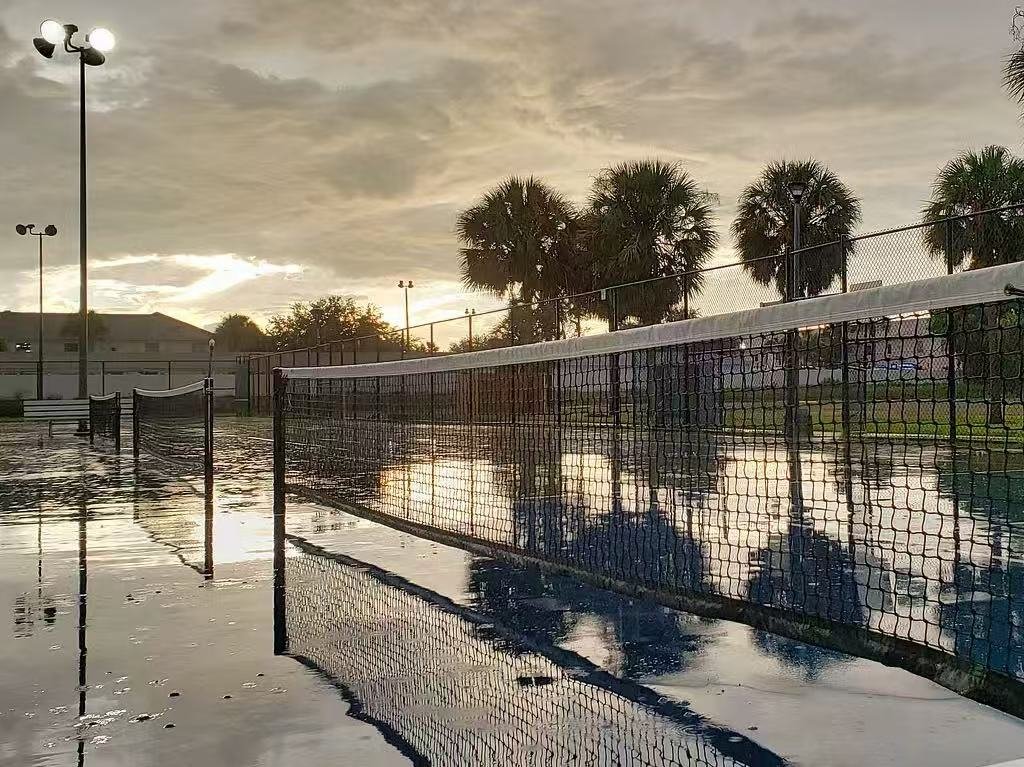
Gather your friends, pick up a paddle, and bring your curiosity to the court. You have read about the game—now it is time to create your own moments worth celebrating!
References:
American Academy of Orthopaedic Surgeons. (n.d.). 5 pickleball injury prevention tips [Infographic]. https://orthoinfo.aaos.org/globalassets/pdfs/pickleball-injury-prevention-tips.pdf
NHS. (n.d.). Sprains and strains. https://www.nhs.uk/conditions/sprains-and-strains/
USA Pickleball. (n.d.-a). Health & safety hub. https://usapickleball.org/health-and-safety-hub/
USA Pickleball. (n.d.-b). How to play pickleball. https://usapickleball.org/pickleball-skills/level-one/how-to-play-pickleball/
USA Pickleball. (n.d.-c). Pickleball rules summary. Retrieved October 18, 2026, from https://usapickleball.org/rules/summary/
USA Pickleball. (n.d.-d). Pickleball scoring & positioning – Side out scoring. https://usapickleball.org/blog-category/pickleball-scoring-positioning-side-out-scoring/
USA Pickleball. (n.d.-e). What is pickleball? https://usapickleball.org/what-is-pickleball/
USA Pickleball. (2025, September 30). Top 7 pickleball serve tips to improve your game. https://usapickleball.org/pickleball-skills/level-three/pickleball-serve-tips/